In this article you will read about:
Introduction to the Self Archetype
Among the core constructs in Jungian psychology, the Self archetype stands as the most encompassing and integrative. Unlike the ego, which mediates conscious experience, the Self represents the totality of the psyche, encompassing both conscious and unconscious aspects, as well as personal and transpersonal dimensions. It is both origin and goal: the psychic nucleus that orchestrates development and the archetypal image of wholeness that draws the personality forward (Jung, 1959).
The Self is not a static state to be reached but a symbolic process of alignment, coherence, and transcendence of opposites. It functions as the internal compass of individuation, continually initiating psychic reorganization when one-sidedness, repression, or stagnation occurs (Stein, 1998). This article examines the theoretical framework and psychological significance of the Self archetype, and how the Archetypal Integration & Individuation Assessment (AIIA) assesses its developmental presence through symbolic profiling.
The Self in Jungian Psychology
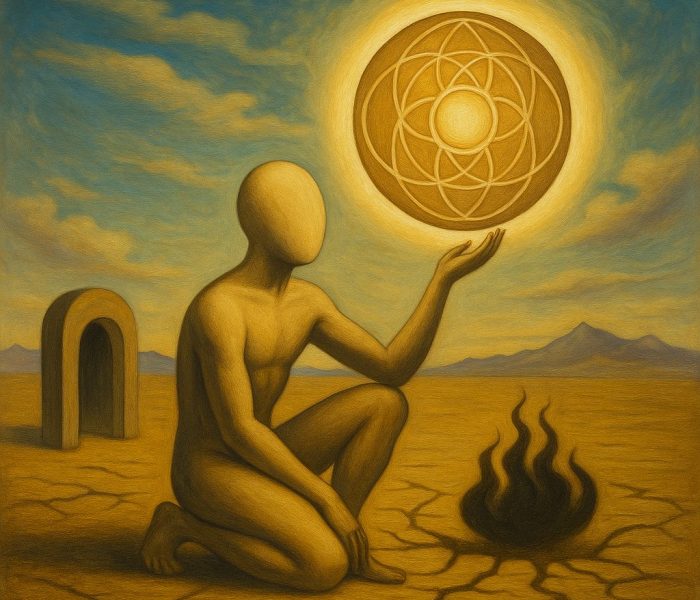
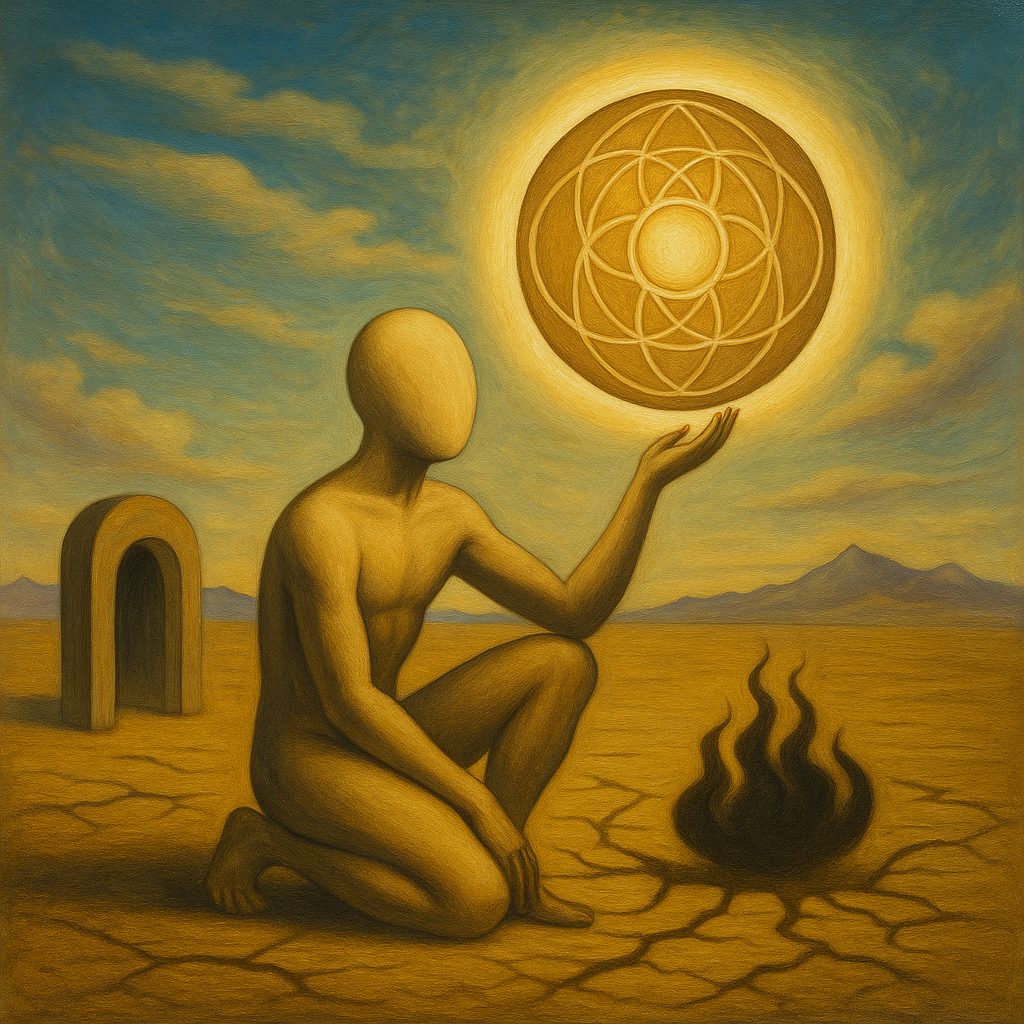
In Jungian theory, the Self is both an archetype and a dynamic principle that transcends ego-consciousness. Jung described it as “a kind of compensation for the one-sidedness of the ego, and as a regulator of the total personality” (Jung, 1969, p. 277). The Self appears in dreams, myths, and religious symbols as mandalas, inner guides, or images of divine wholeness. These manifestations are not literal but psychological representations of an inner ordering principle striving toward psychic equilibrium.
Unlike ego ideals, the Self does not seek control, image maintenance, or moral superiority. Instead, it urges integration through psychological conflict, dream symbolism, synchronistic experience, and the inner voice of conscience or calling. Its demands often emerge in moments of life transition, crisis, or profound inner yearning—not as instructions, but as invitations.
In contemporary developmental psychology, the Self has been echoed in theories of ego development (Kegan, 1982), meaning-making (McAdams & McLean, 2013), and post-conventional identity (Cook-Greuter, 2005). These frameworks affirm that psychological maturity entails an increasing integration of opposites, narrative coherence, and transpersonal awareness—all qualities resonant with the Jungian Self.
Psychological Features of the Self Archetype
Although the Self cannot be reduced to a set of discrete traits, its presence in the psyche is often indicated by several qualitative psychological shifts. Individuals aligned with the Self tend to experience a sense of coherence—a stable inner unity that remains intact even amid external transitions or internal contradictions. This psychological cohesion is not the product of rigid identity, but of integration: a reconciliation of conscious and unconscious elements into a meaningful whole (Jung, 1959).
Another hallmark of Self-alignment is a felt sense of directionality. Life is no longer perceived as a sequence of isolated events or arbitrary choices but begins to cohere around a personal myth or inner narrative arc. The individual may sense an invisible thread running through their experiences, guiding development in a purposeful, even sacred, manner (Stein, 1998).
This process is often accompanied by what Jung referred to as the transcendent function—the psyche’s innate capacity to hold and synthesize opposites without collapsing into premature resolution or defensiveness (Jung, 1960/1969, CW 8). Rather than suppressing ambivalence or complexity, the Self offers a symbolic container in which apparent contradictions can be metabolized and integrated.
Furthermore, psychological flexibility becomes increasingly apparent. The ego, rather than defending fixed self-concepts, demonstrates a willingness to yield to more profound knowing. This may manifest as humility, a capacity for revision, or an openness to guidance from dream imagery, synchronicities, or emotional insight. Such individuals also exhibit symbolic fluency: they can comfortably engage with mythopoetic material, inner dialogue, or active imagination—not as fantasy, but as meaningful aspects of psychological life (Jung, 1959/1969, CW 9i; von Franz, 1997).
These features, taken together, suggest a reorganized psyche in which the ego no longer assumes primacy, but operates in conscious service to a larger, numinous center. The Self becomes both an inner compass and a regulating force, initiating transformation not through control, but through symbolic resonance and inner alignment.
archetypal integration & individuation phase |
Psychology
"I realize that under the circumstances you have described you feel the need to see clearly. But your vision will become clear only when you can look into your own heart. Without, everything seems discordant; only within does it coalesce into unity. Who looks outside dreams; who looks inside awakes."
Carl Gustav Jung Tweet
Barriers to the Emergence of the Self
The journey toward the Self is rarely linear or easy. Jung (1959) emphasized that access to the Self typically emerges only after significant psychological confrontation, particularly with the Shadow, the Persona, and other unconscious complexes. One of the primary obstacles is ego inflation: the belief that one’s conscious identity is sufficient or complete, which precludes receptivity to deeper, more nuanced symbolic content. In such cases, the ego assumes the role of the Self, mistaking self-image or social success for inner wholeness.
Over-identification with outer roles is another common barrier. When individuals conflate their vocational, familial, or social personas with their core being, they often suppress dimensions of themselves that do not conform to those roles. This produces inner fragmentation, as authentic desires, emotions, and intuitions are exiled in order to maintain external coherence.
A further complication arises from what might be termed “split consciousness.” Many individuals experience a disjointed inner world in which rational thought, emotional life, and spiritual insight exist in isolation. This lack of integration inhibits the synthesis necessary for Self emergence. Similarly, psychological development is obstructed when suffering is bypassed or minimized—when discomfort, loss, or existential anxiety are avoided rather than integrated as meaningful components of the individuation process.
These barriers are not simply resistances to be overcome, but necessary developmental tensions. In Jungian thought, the Self does not appear at the end of comfort, but in the crucible of transformation—often symbolized by the descent into the unconscious or the “night sea journey,” where the ego must surrender in order to be remade.
The AIIA Model: Evaluating the Self Archetype
In the Archetypal Integration & Individuation Assessment (AIIA), the Self dimension represents the individual’s relationship with their symbolic center of meaning, wholeness, and inner guidance. This archetype does not correspond to a fixed identity or a perfected state, but rather to a dynamic psychological function that organizes and unifies the personality (Jung, 1959). Scoring in this dimension reflects the degree to which the individual is living in alignment with the Self as a regulating, symbolic principle.
Participants receive a score between 5 and 25, which is interpreted across four distinct developmental levels:

Disconnected from the Inner Core
At this foundational level, the individual’s sense of self may be scattered, externally conditioned, or shaped by reactive patterns. The personality often feels divided, with conflicting sub-identities or adaptive roles pulling in different directions. This fragmentation does not denote pathology, but signals an ego still caught in survival-driven configurations—overidentified with persona, shadow defenses, or unintegrated emotional material.
Interpretation: A low score suggests that the participant is operating from a fragmented sense of self. Identity may feel fluid, contradictory, or hollow, and choices may be driven more by external validation than inner guidance. This phase marks the prelude to individuation, where the psyche begins to seek deeper coherence.

The Inner Self Begins to Form
This level reflects an early integration process. The participant may begin sensing an inner thread—however faint—that connects their values, emotional responses, and actions. There is emerging discernment between authentic desire and ego compensation, though inconsistency still characterizes the experience. This stage is psychologically rich: old self-images begin to dissolve, making room for a more unified core to emerge.
Interpretation: A lower-midrange score indicates that the Self is beginning to stir. The participant is likely entering a transitional period of increasing self-awareness and symbolic receptivity, where individuation becomes an active, though not yet stabilized, process.

Wholeness in Motion
Here, the individual is increasingly aligned with the Self as an inner axis. Emotional contradictions are faced rather than suppressed, and psychic energy flows more freely between conscious and unconscious processes. The person likely engages life with intentionality, responding rather than reacting, and interpreting experience through a symbolic or imaginal lens. There is greater trust in the inner voice and a stable sense of direction.
Interpretation: A mid-to-high score reflects growing coherence between inner and outer life. The participant likely demonstrates emotional integration, psychological resilience, and a meaningful sense of purpose informed by symbolic inner life.
Living from the Self
At this advanced level, the individual consistently lives from the Self as an embodied orientation to life. The ego no longer seeks control but functions in service to inner wholeness. The world is experienced through a mythopoetic lens—where events, relationships, and choices are seen as part of a larger unfolding pattern. The participant is likely capable of holding paradox, embodying symbolic wisdom, and engaging life with creative sovereignty.
Interpretation: A high score indicates that the participant has cultivated a stable, living connection to the Self. Psychological tension is not eliminated but transmuted into insight, expression, and generativity. This level is associated with mature individuation and the capacity to live from the archetypal center of being.

Theoretical Correlations with Established Models
The Self dimension is the central organizing principle of Jungian psychology. It symbolizes psychic totality and the aim of individuation (Jung, 1969). While the ego manages daily identity, the Self encompasses the conscious and unconscious, integrating opposites and guiding the individual toward wholeness. Scoring within this dimension reflects the degree to which an individual experiences inner coherence, life purpose, and psychological alignment. Those with low Self scores may feel disoriented, fragmented, or externally defined, while higher scores suggest a stable center of gravity that enables symbolic resilience, autonomy, and authenticity in the face of life’s complexities (Stein, 1998; Singer, 1994).
Self and Ego Development, Self-Determination, and Meaning-Making
The Self dimension, while symbolic in Jungian terms, shares similarities with self-actualization (Maslow, 1968), ego integrity (Erikson, 1982), and self-determination theory (Deci & Ryan, 2000). It also aligns with post-conventional meaning-making systems, such as constructive-developmental theory (Kegan, 1982), which describe the evolution of consciousness from role-based identity toward integrated self-authorship. A strong Self score on the AIIA suggests advanced psychological coherence, spiritual resilience, and alignment with intrinsic goals—characteristics associated with the later stages of ego and moral development (Loevinger, 1976; Kohlberg, 1984).
While the AIIA emerges from symbolic psychology, several of its constructs align meaningfully with validated dimensions in modern personality research:
| AIIA Dimension | Corresponding Concepts in Scientific Psychology |
|---|---|
| Shadow | Neuroticism (Big Five), Repression, Projection (Freudian defense mechanisms) |
| Anima/Animus | Emotional intelligence, Attachment style, Gender schema theory |
| Persona | Social desirability bias, Self-monitoring, Identity status (Marcia, 1980) |
| Inner Sage | Wisdom (Ardelt, 2003), Reflective functioning, Metacognition |
| Self | Self-actualization (Maslow, 1968), Ego integrity (Erikson, 1982), Self-determination theory (Deci & Ryan, 2000) |
| Growth Edge | Readiness for change (Prochaska et al., 1992), Self-directed learning, Transformational learning theory (Mezirow, 2000) |
Pathways to Self-Integration
The integration of the Self cannot be willed or engineered through ego effort alone. Rather, it unfolds organically through the cultivation of symbolic receptivity and the willingness to engage inner experience with sincerity and depth. One essential practice is dreamwork—not for the purpose of literal interpretation, but to develop a receptive stance toward the psyche’s symbolic language. Regular engagement with dreams can deepen attunement to the Self’s communications and help reorient one’s relationship to meaning and agency.
Writing and reflecting on one’s life through the lens of personal mythology can also support Self-integration. By reframing events as symbolic episodes in an unfolding journey, individuals may begin to discern the patterns, themes, and callings that animate their psychological development (McAdams & McLean, 2013). This reframing invites a deeper dialogue between the conscious self and the Self as inner author or guide.
Active imagination, a technique advocated by Jung, offers another potent approach. In this method, symbolic figures—whether from dreams, fantasies, or meditative images—are engaged in conscious dialogue. This can facilitate access to previously unconscious material and foster a more differentiated relationship between ego and archetype (Jung, 1969).
Silence and solitude also play a crucial role. In a culture dominated by distraction and performance, intentional withdrawal can create the psychological space needed for the Self to emerge. Such practices support intuitive knowing and disrupt habitual identification with external roles or ego concerns.
Finally, the creation and contemplation of mandalas—visual symbols of wholeness and psychic order—can serve as a meditative practice that invites the Self into awareness. Jung himself found mandalas spontaneously appearing in the dreams and artwork of individuals undergoing profound inner transformation, interpreting them as symbolic expressions of the Self’s organizing principle (Jung, 1959).
In all of these practices, the goal is not to “find” the Self as one would a fixed object, but to participate in its ongoing revelation. As Hillman (1975) emphasized, the symbolic attitude transforms ordinary experience into soulful insight. It allows life to be seen not merely as a sequence of problems to solve, but as a field of meaning to enter and embody.
Conclusion
The Self archetype is not merely a theoretical construct but an experiential center of gravity in the psyche—one that reveals itself through dreams, crises, synchronicities, and the longing for wholeness. Through the AIIA framework, participants are invited into a conscious dialogue with this central organizing principle—not as a destination, but as an evolving relationship.
As Jung (1959) noted, “The Self is our life’s goal, for it is the completest expression of that fateful combination we call individuality.” In mapping the presence of the Self, the AIIA helps individuals trace the arc of their individuation, not just as a psychological process, but as a sacred calling.
The Self Archetype Book Recommendations
Here is a collection of the best books on the market related to The Self Archetype:
Our commitment to you
Our team takes pride in crafting informative and well-researched articles and resources for our readers.
We believe in making academic writing accessible and engaging for everyone, which is why we take great care in curating only the most reliable and verifiable sources of knowledge. By presenting complex concepts in a simplified and concise manner, we hope to make learning an enjoyable experience that can leave a lasting impact on our readers.
Additionally, we strive to make our articles visually appealing and aesthetically pleasing, using different design elements and techniques to enhance the reader’s experience. We firmly believe that the way in which information is presented can have a significant impact on how well it is understood and retained, and we take this responsibility seriously.
Click on the icon to see all your thoughts in the Dashboard.
Your Thoughts about the Self Archetype
It’s highly recommended that you jot down any ideas or reflections that come to mind regarding the Self Archetype, including related behaviours, emotions, situations, or other associations you may make. This way, you can refer back to them on your Dashboard or Reflect pop-ups, compare them with your current behaviours, and make any necessary adjustments to keep evolving. Learn more about this feature and how it can benefit you.
References
- Ardelt, M. (2003). Empirical assessment of a three-dimensional wisdom scale. Research on Aging, 25(3), 275–324.
- Cook-Greuter, S. R. (2005). Ego development: Nine levels of increasing embrace. Integral Review, 1(1), 1–31.
- Deci, E. L., & Ryan, R. M. (2000). The “what” and “why” of goal pursuits: Human needs and the self-determination of behavior. Psychological Inquiry, 11(4), 227–268.
- Erikson, E. H. (1982). The life cycle completed. Norton.
- Jung, C. G. (1959). Aion: Researches into the phenomenology of the self (R. F. C. Hull, Trans.). Princeton University Press. (Original work published 1951)
- Jung, C. G. (1969). Archetypes and the collective unconscious (2nd ed., R. F. C. Hull, Trans.). Princeton University Press.
- Kegan, R. (1982). The evolving self: Problem and process in human development. Harvard University Press.
- Kohlberg, L. (1984). Essays on moral development, Volume II: The psychology of moral development. Harper & Row.
- Loevinger, J. (1976). Ego development: Conceptions and theories. Jossey-Bass.
- Marcia, J. E. (1980). Identity in adolescence. In J. Adelson (Ed.), Handbook of adolescent psychology (pp. 159–187). Wiley.
- Maslow, A. H. (1968). Toward a psychology of being (2nd ed.). Van Nostrand.
- McAdams, D. P., & McLean, K. C. (2013). Narrative identity. Current Directions in Psychological Science, 22(3), 233–238.
- Mezirow, J. (2000). Learning as transformation: Critical perspectives on a theory in progress. Jossey-Bass.
- Prochaska, J. O., DiClemente, C. C., & Norcross, J. C. (1992). In search of how people change. American Psychologist, 47(9), 1102–1114.
- Singer, J. (1994). Boundaries of the soul: The practice of Jung’s psychology. Anchor Books.
- Stein, M. (1998). Jung’s map of the soul: An introduction. Open Court Publishing.
- von Franz, M.-L. (1997). Archetypal dimensions of the psyche. Shambhala.
