
Eastern Philosophy

Taoism & Modern Psychology How Wisdom Builds Psychological Flexibility | Envision your Evolution

Taoism & Modern Psychology: How Wisdom Builds Psychological Flexibility

Taoism offers a vocabulary for moving with life instead of against it: wu wei (effortless action), yin–yang (dynamic complementarity), ziran (spontaneity/naturalness), pu (the uncarved block), and de (potency/virtue). Modern psychology, meanwhile, maps how flexible minds suffer less and perform better through processes like flow (Csikszentmihalyi, 1990), self-determination (Ryan & Deci, 2000, 2017), mindfulness/acceptance (Kabat-Zinn, 2013; Lindsay & Creswell, 2017), and psychological flexibility (Hayes et al., 2006; Kashdan & Rottenberg, 2010). Read together, they point to a practical training: respond with less struggle and more precision.

Taoism & Modern Psychology: How Wisdom Builds Psychological Flexibility Read article
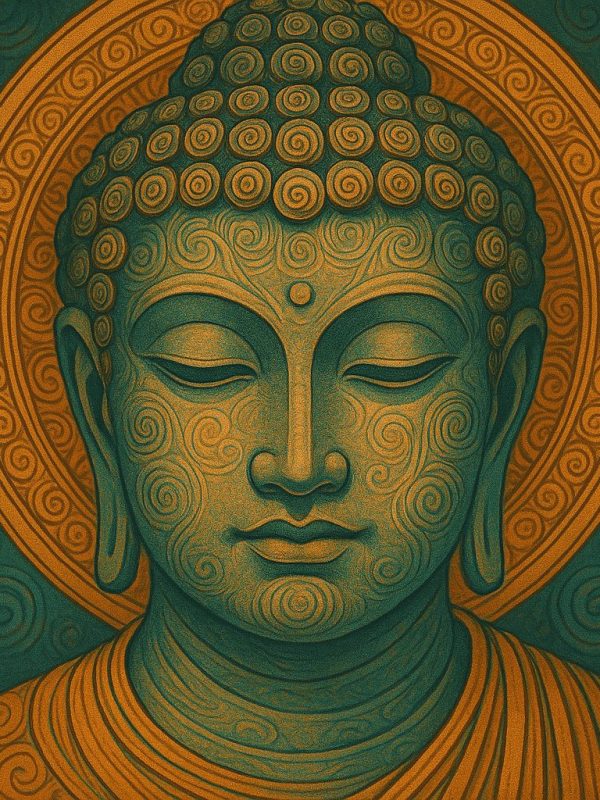
Buddhism & Psychology: Cognitive Defusion and the End of Proliferation | Envision your Evolution

Buddhism & Psychology: Cognitive Defusion and the End of Proliferation

Cognitive defusion—an Acceptance and Commitment Therapy (ACT) skill—helps us relate to thoughts as thoughts rather than as literal truths. By loosening the grip of inner commentary, we regain room to act in line with our values instead of being pushed around by worry, self-criticism, or rigid rules (Hayes et al., 2006; Hayes, 2011). Buddhist sources anticipate this shift through instructions that de-fuel papañca (mental proliferation) and train a direct, non-appropriative way of knowing: the Satipaṭṭhāna’s steady observation of body, feeling-tone, mind states, and mental qualities (MN 10); the Madhupiṇḍika’s analysis of how contact cascades into proliferation (MN 18); and Bāhiya’s radical cue to remain with “only the seen, only the heard, only the sensed, only the cognized” (Ud 1.10) (Access to Insight, n.d.; Ānandajoti, n.d.; Sujato, n.d.; Thanissaro, 2013). This article explains defusion, maps it to those Buddhist insights, summarizes the modern evidence base, and offers step-by-step practices and a one-week plan to help you integrate the skill in everyday life (Beygi et al., 2023).

Buddhism & Psychology: Cognitive Defusion and the End of Proliferation Read article

Applying Buddhist Insights to Everyday Life: Practical Steps | Envision your Evolution

Applying Buddhist Insights to Everyday Life: Practical Steps

Buddhism offers more than abstract philosophy — it is a practical psychology of transformation. Modern practitioners can integrate its principles through simple yet profound applications:

Awareness of impermanence – noticing change without resistance.

Mindful presence – observing emotions and thoughts without judgment.

Right speech and intention – aligning communication with truth and compassion.

Meditative reflection – creating space for insight beyond reactivity.

Compassionate action – transforming personal awakening into service to others.

Each of these practices helps dissolve the habitual patterns of craving, aversion, and ignorance that sustain suffering, replacing them with awareness, balance, and empathy.

Applying Buddhist Insights to Everyday Life: Practical Steps Read article

Buddhism: The Psychology of Awakening and the Transformation of Suffering | Envision your Evolution

Buddhism: The Psychology of Awakening and the Transformation of Suffering

The Buddhist tradition offers a profound psychological framework for understanding human suffering and transformation. Rooted in the teachings of Siddhārtha Gautama, known as the Buddha (“the awakened one”), Buddhism emphasizes the mind’s central role in shaping perception and experience (Rahula, 1974). Rather than viewing suffering as an external affliction, Buddhist psychology identifies it as a product of attachment, craving, and delusion — patterns that can be observed and transformed through conscious awareness.
At the heart of Buddhism lie the Four Noble Truths and the Noble Eightfold Path, which together outline both the diagnosis and cure for human distress (Harvey, 2013). Through mindfulness, meditation, and ethical practice, Buddhism provides a path toward liberation — a process that deeply resonates with modern psychological approaches to self-awareness, emotion regulation, and cognitive restructuring (Kabat-Zinn, 1994; Wallace & Shapiro, 2006).

Buddhism: The Psychology of Awakening and the Transformation of Suffering Read article

Envision your Evolution

Contemporary psychology

Envision your Evolution 2025 © All Rights Reserved
Scroll to Top

Envision your Evolution X Analytical Psychology

Discover the Archetypal Integration & Individuation Assessment

Understanding oneself is a fundamental human drive, yet traditional psychological assessments often fail to capture the complexity of inner experience, symbolic identity, or stages of existential and psychological maturation. Rooted in the principles of Analytical Psychology and inspired by the work of Carl Gustav Jung and Marie-Louise von Franz, the Archetypal Integration & Individuation Assessment (AIIA) offers a reflective model for exploring the internal terrain of the psyche. This model is based on archetypal constellations and one’s evolving relationship to the self, the unconscious, and others.