
Social Proof in 2025: From Testimonials to Community Screenshots
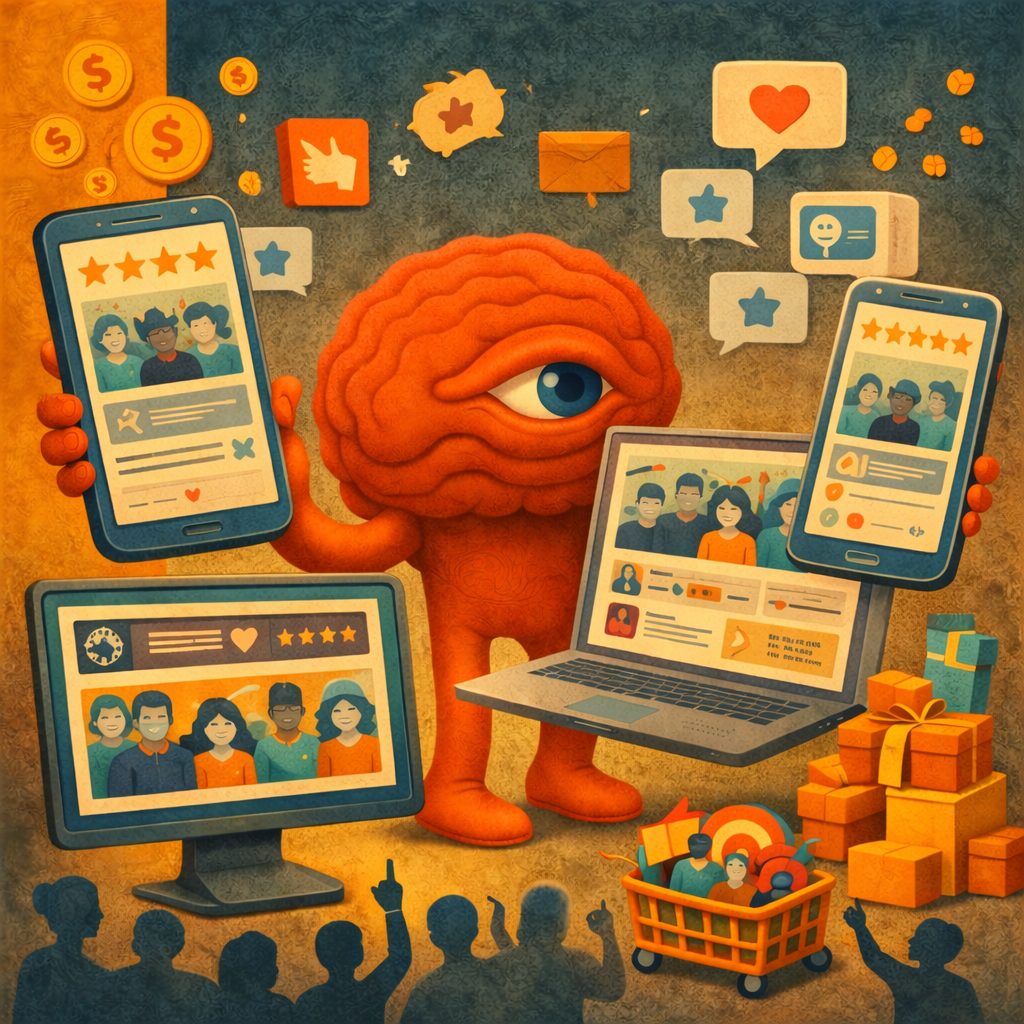
Social proof works because uncertainty is expensive. When people can’t fully verify quality in advance, they rely on social cues—what others chose, what others experienced, and who is endorsing the option—to reduce perceived risk (Cialdini, 2009). In 2025, the mechanism hasn’t changed. The marketplace conditions have.
Review ecosystems are noisier, audiences are more skeptical, and platforms + regulators are increasingly focused on deceptive review practices and artificial amplification. The FTC’s 2024 final rule banning fake reviews and testimonials (including practices enabled at scale by AI) reflects this shift toward enforcement and deterrence.
Meanwhile, consumer research suggests trust in reviews “as much as personal recommendations” has dropped sharply compared to earlier years, signaling that audiences still read reviews—but treat them more critically.
25 Psychological Triggers You Can Use in Marketing
Research in consumer psychology and branding suggests that choice is driven largely by fast, intuitive System 1 processes—automatic judgments built from emotion, familiarity, and simple cues—rather than slow, rational System 2 analysis (Drăgoi, 2024; Kahneman, 2011; Venkatraman, 2020).
This article re-centers brand strategy around that reality. You’ll learn:
What positioning really means in the customer’s head
Why emotion, story, and distinctiveness drive brand choice more than clever taglines
How mere exposure and recognizable brand assets make you “easy to pick” (Walvis, 2008; Sharp, 2010).
A practical step-by-step activity to craft a one-line positioning statement people can actually feel
A short FAQ to clear up common confusion
Consumer Psychology 101: The Mental Shortcuts Behind Every Purchase
We like to believe we buy with logic:
“I compared the options, weighed the pros and cons, and chose the best one.”
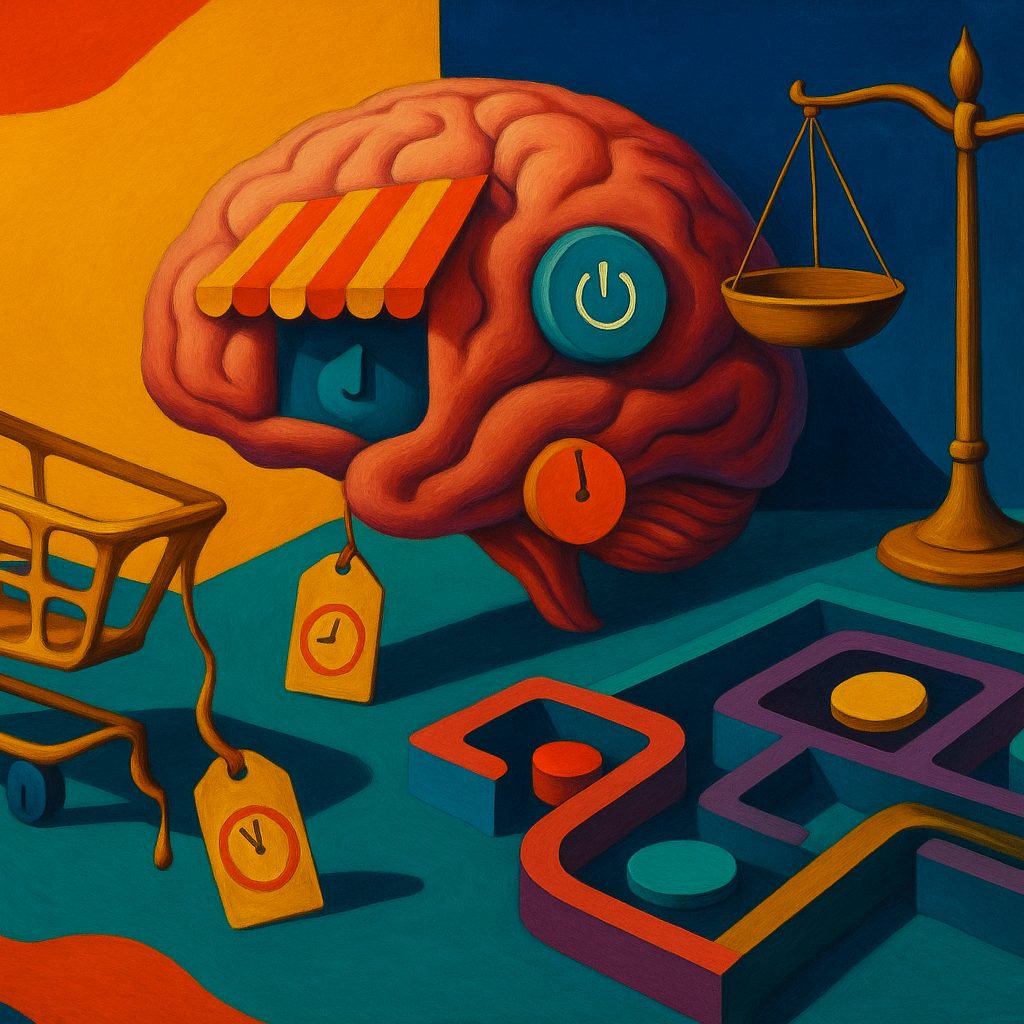
In reality, most of the time our brain is using fast, automatic shortcuts to decide:
This feels right → click.
Those shortcuts are cognitive biases and heuristics—mental rules of thumb that usually help us make quick decisions, but also make us predictable in ways marketing can leverage (or abuse). Behavioral economists and psychologists have spent decades showing that these shortcuts explain many of our “irrational” choices in money, health, and consumption (Kahneman, 2011; da Silva, 2023).
Positioning in Saturated Markets: Stand Out by Owning a Specific Moment
When a market is saturated, “better features” rarely creates separation. Most offers blur—because the human brain doesn’t compare everything. It filters, recognizes, and retrieves a few options from memory, then rationalizes the choice afterward. In other words: you don’t win by being everyone’s best option—you win by being someone’s first thought in a specific situation.
That’s where “owning a moment” becomes a positioning strategy grounded in cognitive psychology: you attach your brand to a repeatable buying situation and the emotion inside it, so your name shows up automatically when that moment happens. This is the logic behind Category Entry Points (CEPs)—the internal and external cues that trigger memory retrieval when someone enters a buying situation.
Brand Strategy Made Human: Positioning That Matches How People Decide
Research in consumer psychology and branding suggests that choice is driven largely by fast, intuitive System 1 processes—automatic judgments built from emotion, familiarity, and simple cues—rather than slow, rational System 2 analysis (Drăgoi, 2024; Kahneman, 2011; Venkatraman, 2020).
This article re-centers brand strategy around that reality. You’ll learn:
What positioning really means in the customer’s head
Why emotion, story, and distinctiveness drive brand choice more than clever taglines
How mere exposure and recognizable brand assets make you “easy to pick” (Walvis, 2008; Sharp, 2010).
A practical step-by-step activity to craft a one-line positioning statement people can actually feel
A short FAQ to clear up common confusion
How to Build a Brand Story That Sticks in the Brain
Most brand stories don’t fail because they’re “bad”—they fail because they’re built like information, not memory. People can agree with your mission, admire your offer, even feel inspired while reading your sales page—and still forget you an hour later. Why? Because the brain doesn’t store scattered facts very well. It stores organized experience: who wanted what, what got in the way, what changed, and what becomes possible next.
In this article, you’ll learn the psychology behind what makes a brand story stick: narrative transportation (immersion beats explanation), processing fluency (clarity reduces friction), self-relevance (people remember what feels personally connected), and emotion (felt meaning strengthens encoding).