The “What” Skill in DBT: A Core Mindfulness Technique
The “What” skills in Dialectical Behavior Therapy (DBT) are the core actions of mindfulness: Observe, Describe, and Participate. They answer the question: What do I actually do to be mindful?
With Observe, you simply notice your thoughts, emotions, body sensations, and surroundings—without trying to change them. Describe means putting accurate, nonjudgmental words to your experience, like “I notice sadness in my chest,” instead of “I’m weak.” Participate invites you to throw yourself fully into the present moment, rather than watching life from the sidelines.
Practiced regularly, these skills reduce emotional reactivity and help you respond with more clarity and intention.
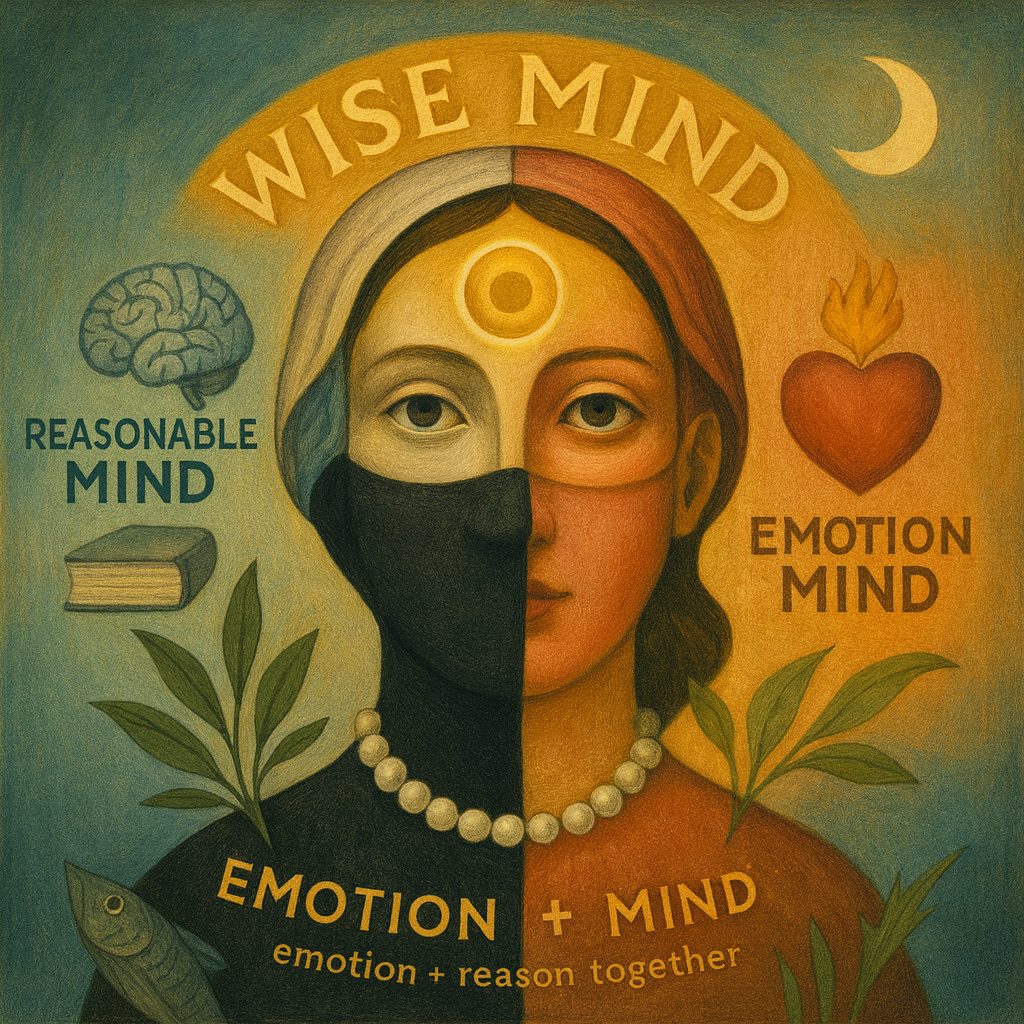
Wise Mind: The Core of Emotional Balance in DBT
In Dialectical Behavior Therapy (DBT), Wise Mind is the inner place where emotion and reason come together. It integrates Emotion Mind (feelings, urges, impulses) and Reasonable Mind (logic, facts, plans) into a deeper knowing about what truly fits you and your life. Wise Mind isn’t loud or dramatic—it often shows up as a quiet sense of “this is the path that feels right,” even when it’s hard.
By practicing mindfulness, pausing before reacting, and listening to both your heart and your logic, you can access Wise Mind more often and make choices that support long-term emotional balance.

The “How” Skill in DBT: Mastering Mindful Action
In Dialectical Behavior Therapy (DBT), the “How” skills explain how to practice mindfulness in daily life: Nonjudgmentally, One-mindfully, and Effectively.
Nonjudgmentally means noticing experiences without labeling them as good, bad, weak, or wrong—just seeing what is. One-mindfully invites you to do one thing at a time, with full attention, instead of multitasking or mentally checking out. Effectively means focusing on what actually works for your goals, rather than what you think “should” work or what pride or anger pushes you to do.
Together, these skills transform mindfulness from a concept into a practical way of acting with clarity and intention.

Self-Soothe Skill in Dialectical Behavior Therapy DBT
The Self-Soothe skill is a core distress tolerance tool that helps you calm intense emotions by using your five senses: sight, hearing, smell, taste, and touch. Instead of turning to self-destructive behaviors when overwhelmed, you intentionally create comforting, sensory experiences—like soft lighting, calming music, a favorite scent, a warm drink, or a cozy blanket.
By building a personalized “self-soothe kit” and practicing these actions before and during crises, you teach your nervous system that there are safe, nurturing ways to ride out emotional pain, rather than reacting impulsively or shutting down.

The TIPP Skill in Dialectical Behavior Therapy DBT
The TIPP skill is a fast-acting distress tolerance tool designed to bring your body out of “emotional overdrive.” TIPP stands for Temperature, Intense Exercise, Paced Breathing, and Progressive Muscle Relaxation. These techniques target your nervous system directly: changing your body temperature (like using cold water), engaging in short bursts of vigorous movement, slowing your breath, and releasing muscle tension.
When emotions spike to a 9 or 10 out of 10, TIPP helps you quickly reduce physiological arousal so your brain can think more clearly—making it easier to use other DBT skills and choose safer, more effective actions.

The ACCEPTS Skill in Dialectical Behavior Therapy DBT
The ACCEPTS skill is a core distress tolerance strategy used to help you get through intense emotions without making the situation worse. ACCEPTS stands for Activities, Contributing, Comparisons, Emotions, Pushing away, Thoughts, and Sensations. Each letter offers a different way to temporarily shift your focus when you’re overwhelmed—like distracting yourself with a task, helping someone else, generating an opposite emotion, or using strong but safe physical sensations. ACCEPTS doesn’t erase the problem; it buys you time. By using these tools when urges are high, you can ride out emotional waves more safely and protect your long-term goals.

DBT Problem Solving Skill: A Step-by-Step Guide to Changing Situations
The Problem Solving skill helps you work with emotions that fit the facts by changing the situations that trigger them. Instead of staying stuck in “I can’t handle this,” you move step-by-step: clearly define the problem, check the facts, identify your goal, brainstorm possible solutions, weigh the pros and cons, choose one plan, and break it into small, doable actions. Problem Solving doesn’t guarantee a perfect outcome, but it shifts you from helplessness to purposeful action. Over time, this skill reduces repeated crises, builds confidence, and supports a life that feels more workable and aligned with your values.

DBT Pros and Cons Skill: A Worksheet for Long-term Consequences
The Pros and Cons skill is a structured way to pause and look beyond the urge of the moment. Instead of acting impulsively, you deliberately compare the short- and long-term consequences of two paths: acting on the urge versus using your DBT skills. By writing down the benefits and costs of each option, you make the “hidden price” of quick relief more visible—things like shame, damaged relationships, or derailed goals. Over time, this practice strengthens Wise Mind, boosts motivation to choose healthier coping, and helps you stay aligned with the life you actually want to build.

The IMPROVE the Moment Skill in DBT : Structured Acceptance
The IMPROVE the Moment skill helps you get through situations you can’t change right now by making the present moment more bearable. IMPROVE stands for Imagery, Meaning, Prayer (or spiritual connection), Relaxation, One thing in the moment, Vacation, and Encouragement. Each element offers a way to soften emotional pain—whether by visualizing a safe place, finding personal meaning in what you’re facing, calming your body, narrowing your focus to one task, taking a brief “mental vacation,” or talking to yourself kindly. Rather than fixing the problem, IMPROVE supports you in surviving it without collapsing or acting on harmful urges.

Radical Acceptance in DBT: How Facing Reality Reduces Suffering
Radical Acceptance is the skill of fully acknowledging reality as it is—especially the parts you never wanted or chose. Instead of staying stuck in “This shouldn’t have happened,” you practice recognizing, “It did happen, and continuing to fight it is adding to my suffering.” Radical acceptance doesn’t mean approving, forgiving, or forgetting. It means dropping the inner war with the facts so you can conserve your energy for healing, grieving, and wise action. Over time, this shift from resistance to acceptance can soften bitterness, reduce impulsive coping, and create space for building a life that feels more livable and aligned with your values.

ABC PLEASE in DBT: How to Reduce Emotional Vulnerability
The ABC PLEASE skill in DBT is one of the core emotion regulation tools designed to reduce vulnerability to emotional storms and help you stay out of “Emotion Mind.” In DBT language, ABC PLEASE is a set of preventative self-care habits—a kind of emotional immune system—that makes it easier to use other skills (like Opposite Action, TIPP, and Check the Facts) when big feelings show up (Linehan, 2015a; DBT Self Help, n.d.). This guide walks through what the ABC PLEASE skill is, how each part works, and how to turn it into a daily DBT ABC PLEASE self-care routine. It’s written so it can double as psychoeducation, a DBT ABC PLEASE worksheet explainer, or long-form content.

Opposite Action in DBT: Turning Emotional Urges into Wise Action
Opposite Action is a core skill in Dialectical Behavior Therapy (DBT) that helps you change emotions by changing what you do. When your emotions don’t fit the facts—or when acting on them would make things worse—Opposite Action invites you to do the exact opposite of your emotional urge, on purpose and with your whole body. In DBT, emotions are understood as action programs: they prepare your body and mind to respond in specific ways (for example, fear urges you to avoid, anger urges you to attack, shame urges you to hide). Opposite Action means: Acting opposite to the emotion’s action urge, when that emotion does not fit the facts or when acting on it is ineffective (Linehan, 2015).

The STOP Skill in DBT: How to Hit Pause on Impulses and Choose Wise Actions
Within the Distress Tolerance module, the STOP skill is a foundational crisis-survival tool that does exactly this: it creates a small but powerful gap between intense emotion and behavior (Linehan, 2015). The STOP skill is short, simple, and portable, which makes it especially useful in real-world situations—arguments, urges to self-harm, cravings, or moments of overwhelming fear—where there is very little time to think. It functions as a kind of “emotional emergency brake,” allowing the individual to interrupt automatic reactions and bring mindful awareness into the moment.

The Positive Self-Talk Skill in DBT: Becoming Your Own Inner Ally
Positive self-talk in Dialectical Behavior Therapy (DBT) is about learning to be on your own side—especially when emotions are intense. It’s a structured way of replacing automatic negative thoughts (ANTs) with more realistic, encouraging, and compassionate statements so you can regulate emotions instead of being overwhelmed by them (DBT.tools, 2025; Home Counties Therapy, 2023).

Cope Ahead in DBT: Practicing Your Response Before the Stress Hits
In Dialectical Behavior Therapy (DBT), the Cope Ahead skill is an emotion regulation strategy that helps you prepare for stressful, triggering, or high-stakes situations before they happen. At its core, Cope Ahead is structured mental rehearsal: you imagine the upcoming event in detail, anticipate your emotional reactions, and practice responding skillfully using DBT tools rather than acting on impulse (Linehan, 2015a; Linehan & Wilks, 2015).

Building Mastery in DBT: Growing Confidence Doing Challenges
In Dialectical Behavior Therapy (DBT), the Build Mastery skill is all about doing small, doable challenges regularly so you feel more capable, confident, and resilient over time. It sits inside the ABC PLEASE set of emotion regulation skills under the “B”—Build mastery—and is a powerful antidote to helplessness, shame, and chronic overwhelm (Linehan, 2015a)

The FAST Skill in DBT: Keeping Your Self-Respect in Hard Conversations
The FAST skill in Dialectical Behavior Therapy (DBT) is all about self-respect effectiveness: how you communicate and make decisions in relationships without abandoning your values, over-apologizing, or bending yourself into knots just to keep the peace (Linehan, 2015). In DBT interpersonal effectiveness, there are three targets:
Objectives effectiveness – getting what you want (DEAR MAN)
Relationship effectiveness – taking care of the relationship (GIVE)
Self-respect effectiveness – taking care of you (FAST)
FAST is the self-respect piece. You use it when you want to be able to walk away from a conversation thinking, “I might not have gotten exactly what I wanted, but I like how I showed up.”

The GIVE Skill in DBT: Protecting Your Relationships and Speak Your Truth
In Dialectical Behavior Therapy (DBT), the GIVE skill is part of the interpersonal effectiveness module and is specifically designed for relationship effectiveness—how you take care of the relationship itself while you’re asking for something, saying no, or discussing something difficult (as opposed to just getting your way or protecting your self-respect).
Dialectical Behavior Therapy
GIVE is an acronym:
G – (Be) Gentle
I – (Act) Interested
V – Validate
E – (Use an) Easy manner
Dialectical Behavior Therapy
You typically use GIVE when:
The relationship is important (partner, close friend, family member, boss, therapist, etc.). You want to ask for something, set a boundary, or resolve a conflict without damaging the bond.

DEAR MAN in DBT: A Structured Way to Ask for What You Need
The DEAR MAN skill is one of the core interpersonal effectiveness tools in Dialectical Behavior Therapy (DBT). It gives you a clear script for how to ask for what you want, say no, or address a problem without exploding, collapsing, or losing self-respect (Linehan, 2015). In DBT, interpersonal effectiveness is about three things: Objectives – getting your needs met or solving a problem. Relationship – keeping or improving the relationship. Self-respect – acting in line with your values and treating yourself with dignity. DEAR MAN specifically targets “objective effectiveness”—getting a concrete outcome (e.g., a schedule change, a later curfew, payment you’re owed) while still respecting the relationship and yourself (Linehan, 2015; Seaway Valley CHC, 2022).

Boundary Building Skill in DBT: Creating Healthy Limits
The Boundary Building skill in Dialectical Behavior Therapy (DBT) sits inside the Interpersonal Effectiveness module and focuses on learning how to say, “This is okay with me—and this is not,” in ways that protect both your wellbeing and your relationships. DBT framing emphasizes that healthy boundaries are neither rigid walls nor open floodgates; they are flexible, chosen limits that let in respect, care, and connection while filtering out hostility, manipulation, and overload.