Surrounding the central flower is a swirling sky, representative of the element- Air. In wave-like, circular patterns, the sky emanates an ethereal, mystical aura. Against the backdrop of the Renaissance Realism, the air here symbolizes openness, freedom of thought, and expansivity, resonating with the concepts of collective unconscious.
Encompassing the mandala are towering trees, wisely protecting the inner symbols. The detailed bark and foliage reflecting the fine Renaissance artistry symbolize longevity, strength, and grounding- emphasizing the grounded nature of our conscious life.

Within the mid-realm of the design, three stark Triangles inscribed within each other form a trinity. The points of the triangles, illuminated brightly, symbolise the conscious, subconscious, and the superconscious. They seem balancing at the corners, creating a perception of dynamic equilibrium and resonance with Van Gogh's brushwork.
The enclosing periphery bursts with colored strokes of turbulence that reflects'Equilibrio completo', translating to complete balance,'Ordem no seu maior nivel', order at its highest level, and'Potencia inexplicavel', inexplicable power. It resonates Van Gogh's prowess for capturing the essence of a moment, conveying harmony and dynamism in intense motion.

Circling the tranquil waters are intricate, repeating patterns of lilies, rendered in the detail-oriented Renaissance style. Lilies universally symbolize faithfulness, encouraging children to express their choice of faithful colors amidst the petals.
The outermost edge of the mandala captures the shape and flow of the wind, portrayed through sweeping, curved lines. It's playful and open to interpretation, inviting imagination and creativity of different shades for the wind.
Expressive of a journey from inner calm to the embracing forces of the wind, the mandala makes a thoughtful coloring exercise for young minds.

The inner circle teems with myriad Lego figures and'bricks' mid-action, symbolizing Dance- the celebration of life, expression of joy, and the dynamic flow of energy. Groups of figures are portrayed mid-dance, with Lego'connectors' signifying movement and connection, their bodies form abstract patterns reminiscent of traditional mandala designs.
The outer circle embodies the theme of Treasure, with giant chests filled with Lego treasures and gems strategically positioned at cardinal points. Various paths, built with Lego-like bricks indicate journeys of exploration and discovery, inspiring an adventurous spirit.


Just inside this, a ying-yang symbol formed by a helix of DNA strands intertwines with a closed meditative eye, representing Genetic gifts and spiritual closed practices.
The outer rim of the mandala features bold, Graffiti style tribal patterns and cryptic inscriptions, hinting at the richness and mystery of African tribes and hidden generations of languages.
Each symbol- the dollar sign, coins, DNA helix, meditative eye, tribal patterns, and inscriptions- is intricately design, providing spaces for children to fill in with color.
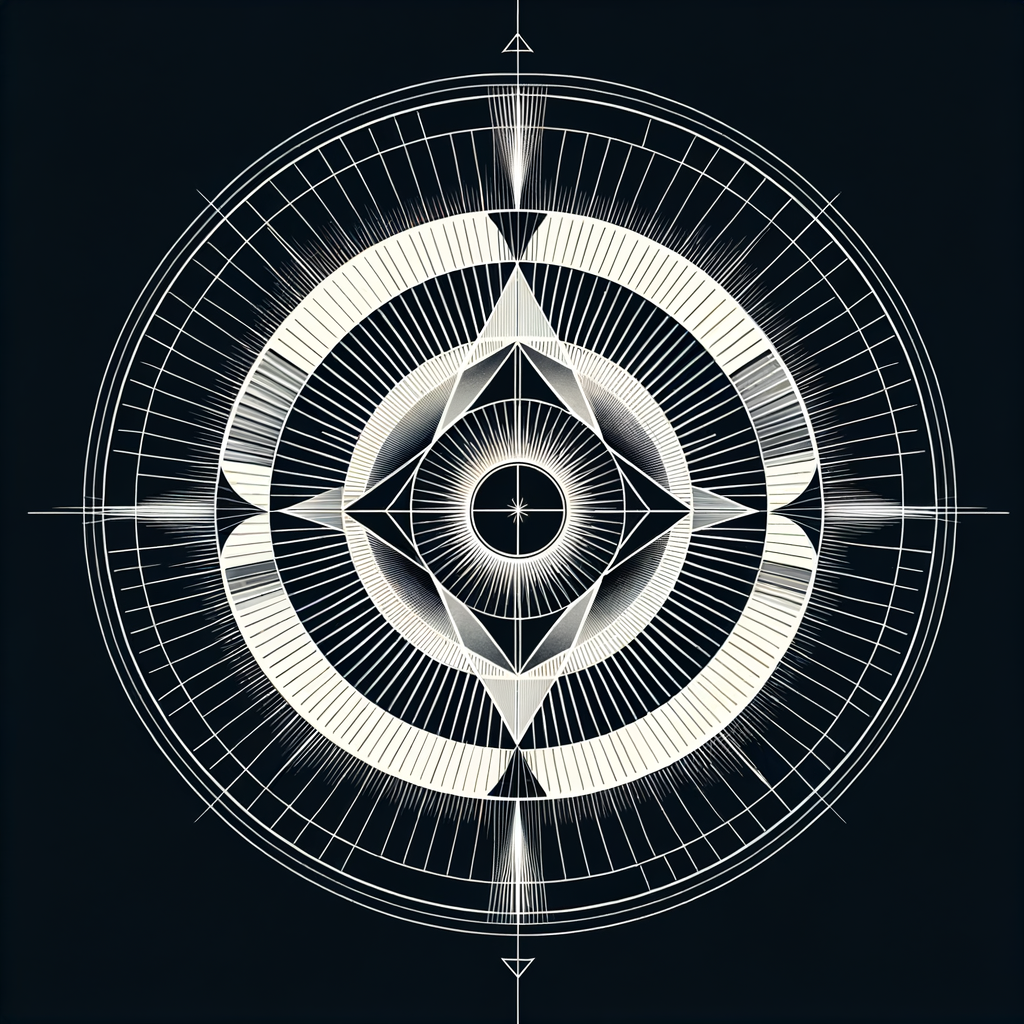
At the center of the mandala is a clear, unbroken circle representing Water. The circle embodies fluidity, softness, and life, similar to water's characteristics. It is drawn as a simple, enclosed space, evoking the fundamental nature of water as a life force.
The next layer, representing Light, is made up of radiating geometric lines that expand outwards from the Water symbol. The lines, precise and thin like beams of light, create an effect of illumination or light radiating from the core, embodying clarity, illumination, and knowledge.
The outermost layer represents Darkness. This is drawn as a thick, bold band encapsulating the entire mandala. In its stark contrast to the rest of the design, it illustrates the unknown, the unconscious, and shadows that define our edges, a contrast between known(light) and unknown(dark).


Next layer captures the cave, depicted by a series of concentric circles with pointed, stalagmite-like shapes radiating inwards. This illustrates mystery, the subconscious, and introspection, involving the process of self-discovery and personal growth.
On the outer rim, the bear wraps the mandala. It's not an ordinary bear but is structured with angular lines and tech-inspired accents, showing strength, unpredictability, and protection. This signifies the conscious world, and the bold courage needed to face it.
Overall, the mandala presents a journey of self-discovery, from the lure of the honey pot, through the mystery of the cave, and the courage of the bear.

The innermost layer features a compelling pattern akin to a Fire Spiral, showing swift, flame-like strokes swirling outwards symbolizing transformation and energy.
The outer layer interpreting Darkness shows an elaborate collection of closed-eyes and nebula formations. It suggests a sense of the unknown and the subconscious, providing a striking contrast to the inner patterns.
The patterns intricately woven together, while upholding the depth of meanings each layer symbolizes, maintains an aesthetic whole. Due to its black and white renderings, it is inviting for children to impart their hues onto this imaginative journey.

Inner circles of the Mandala feature stylistic portrayals of the Greek symbols for Alpha and Omega. Rendered in deep, bold blues, they evoke Van Gogh's iconic night sky, symbolizing the beginning and the end, the eternally complete cycle of existence within which all aspects of life and energy ebb and flow.
The outer circle envelops the whole Mandala in a crackling tempest of Thunder. Painted in grating strokes of stormy grey and ominous black, it emphasizes a sense of nature's imposing power, representing challenges and upheavals that usher growth and fulfillment. The thick, intense brushwork recalls Van Gogh's motion-filled skies, enhancing the electrifying sensation of the thunderous roar surrounding the calming center.

The periphery of the mandala vibrantly portrays a diametric link, showing six panels, alternating between scenes of a volleyball mid-air, a red and blue spider lily in bloom, and a microphone against a blaring audience. The volleyball signifies challenge and team spirit, while the spider lily, a symbol of death and resurrection, presents the contrasting emotions of loss and hope. The microphone stands for communication and self-expression. Rendered in detailed manga style, the Mandala vividly encapsulates these contrasting themes, infused with Japanese visual aesthetic principles.

The inner ring of this mandala draws inspiration from the biblical narrative of Adam and Eve. Intricate depictions of Eden reveal the first couple at the moments of creation and temptation, embodying the beauty and complexity of humanity's origins. Bountiful trees and a cunning serpent wrap around the couple, symbolizing love, innocence, curiosity, and the fall from grace.
The outer ring of the mandala brings to life the metaphor of the torch. A circle of radiant, golden torches, their flames flickering and dancing, mark the boundary of the mandala. The torches symbolize enlightenment, hope, and the guiding light in humanity's journey, giving the mandala an uplifting message of illumination amidst darkness.

In the next layer, radiating power and elegance are bold and robust Tigers. Their faces are split in the middle between black and white, reflecting balance and strength. Amidst them are piercing eyes, embodying fierceness, bravery, and unpredictability. The Tigers signify the owner's inner power, will, and spirit- truly embodying the inner meaning of the mandala.
The outermost layer, presenting the idea of Pyramids, exhibits a series of three-dimensional triangles, symbolizing hierarchy, structure, and stability. Each edge is adorned with a primitive, folk-art pattern, incorporating the feel of Vintage Americana, representing the wide societal structures and the owner's outer reality.

Conceptual: The central dove embodies peace, acting as a beacon in the core. The swirling geometric axes, rendered in the traditional folk art style, signify our inherent order amidst chaos, the contrasting nature of human existence. Finally, the outer layer of abyss reflects life's mysteries, the unfathomable depths we may plummet to, showcasing life isn’t just peaceful order but also chaotic, mysterious experiences.

The next layer is inspired by Alchemy; meticulously painted mythical creatures, intricate symbols, and ancient formulas enclose the Apple. These symbols represent the transformative aspects of existence, with gold detailing suggesting transmutation and enlightenment.
The outer edges of the Mandala are adorned with exquisite Renaissance-style roses; their delicate petals, seasonal blooms, and thorny stems beautifully depict love, beauty, and the fleeting nature of life. The rich reds and soft pinks make a stark contrast to the crisp apple and the gold alchemical symbols, emphasizing the intense human emotions and experiences.

The inner layer manifests Shadow through enigmatic, muted colors hinting at silhouettes of familiar objects. Elusive shapes and symbols lurk in the shadows, and subtle glimmers of unknown elements bring a sense of ominous uncertainty and subtle mystery.
Moving towards the periphery, the Mandala becomes drenched in Light. Futuristic cityscapes glow with neon blues and purples, spaceships traverse the skies, and portals to other dimensions form the outermost circle, detailing an embracement of the unknown and an optimistic projection into the future.


Encircling it, mighty Dragons stretch their sinuous bodies, their wings unfurled and fanning outward, their tails coiling inward creating intricate patterns. Dragons symbolize primal power, wisdom, strength and hidden knowledge. Their scale-covered bodies and fiery breath suggest the transformative power of fire in Alchemy.
The outer rim, the Abyss, is depicted by endless voids, start-ups, swirling galaxies and obscure nebulae. Fantastical sci-fi elements such as spaceships and alien planets appear as tiny specks in the immensity. The Abyss illustrates the unknown, the vastness of the unconscious mind and the mysteries of the universe.

Ringed around the oyster, bread is broadly applied through the mandala space. It symbolizes sustenance and the everyday materials of life, indicative of human basic needs and focusing on the appreciation of the universal experience of survival and perseverance.
Nestling comfortably on the external periphery, a bridge spans the circumference, depicted in intricately grown plants and naturally arranged stones. It conveys connection, transformation, and transition, offering a passage from the strictures of the inner self to the broader experiences of life, uniting all the elements together.

In the heart of the mandala, a majestic Lion stands gloriously, representing personal authority and self-confidence with the richness of Renaissance detailing. The Lion coloured in golden hues has a crown on its head, manifesting the embodiment of power, strength, and courage. Surrounding the Lion, the inner circle of the mandala illustrates a Hearth. The brick fireplace is detailed with logs burning brightly within, symbolizing comfort, home, warmth, and unity. It subtly depicts human longing for a tranquil and secure dwelling. Sketched in warmer tones, the outermost circle of the mandala is infused with the presence of the Sun; its glowing rays extend toward the mandala's edges. Drenched in gold, the Renaissance-styled ornate Sun radiates life, enlightenment, and spiritual illumination.
Conceptual Description:
The symbolic Lion in the Mandala's core embodies the circle's Self or Ego, depicting courage, strength, and assertiveness, with a hint of regal power. The Hearth encircling it symbolizes the unconscious mind, promoting nurturing, safety, and familial unity. In the mandala's outskirts, the Sun's round representation illuminates the grand Self, symbolizing consciousness, wisdom, and an enlightened mind, thus completing the mandala's narrative.


How to Create Your Own Mandala: A Step-by-Step Guide
In the analytical psychotherapy, which includes the recognition and the conscious integration of the contents of the collective unconscious, the spontaneous drawing of mandala is required. While a finished mandala bears importance as a focus for meditative practice, the creation process remains equally important. You can analyze your finished mandala using a map that shows the areas corresponding to important symbols of the psyche and Jungian Archetypes, such as the Persona, Animus & Anima and the Shadow.
While a finished mandala bears importance as a focus for meditative practice, the creative process remains equally important. There are three basic layers to a mandala’s meaning.
The outer meaning represents the divine form of the universe.
The inner meaning creates a map to guide the mind to enlightenment.
The secret meaning, however, remains between the artist and the creation regarding specific details.
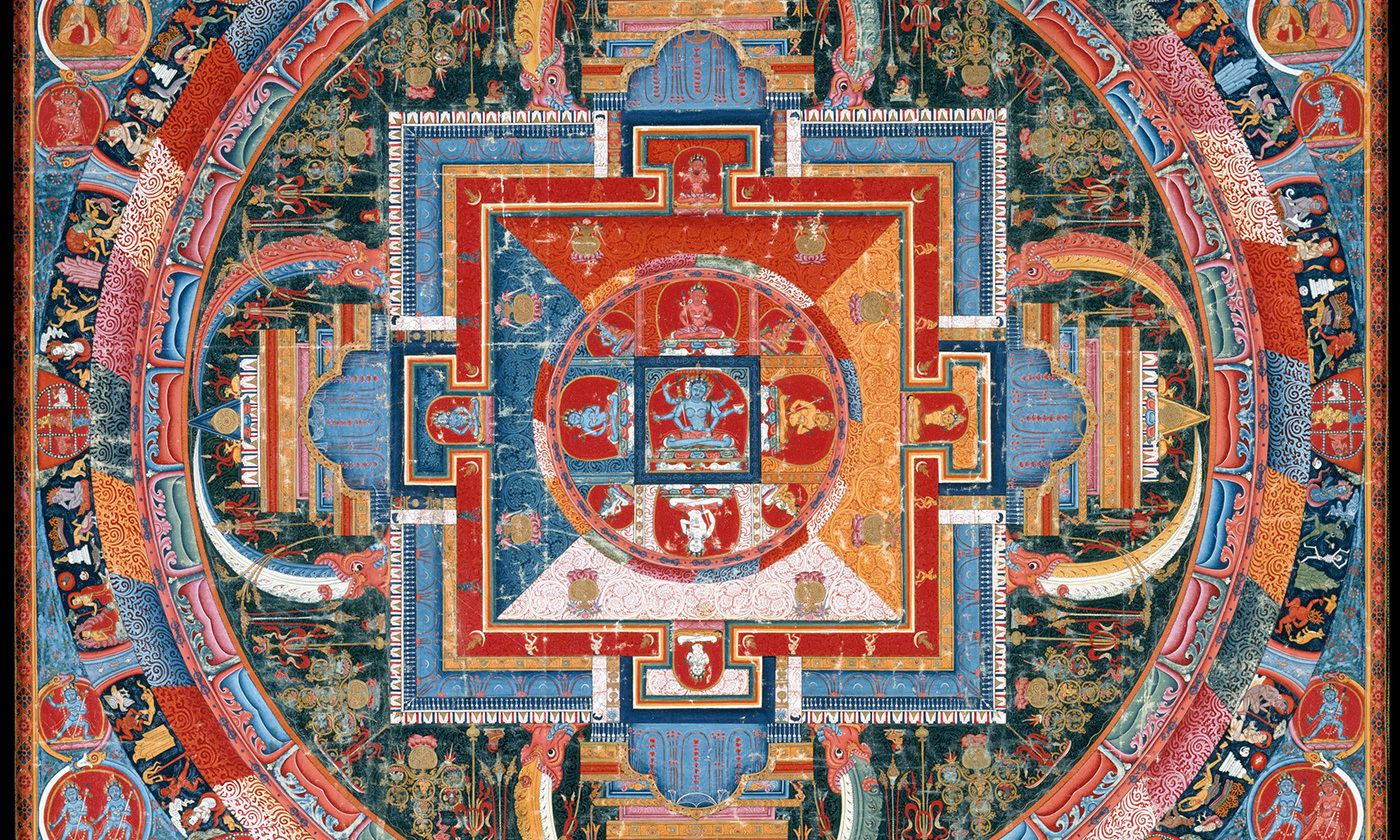
Exploring the Depth of Mandala Symbolism in Analytical Psychology
Mandala is a graphical representation of the center (the Self at Jung). It can appear in dreams and visions or it can be spontaneously created as a work of art. It is present in the cultural and religious representations.
Examples of mandala can be found in all the ancient cultures. We find it in Christianity under the form of frescos with animal images representing apostles and under the form of the zodiac. The astrologic zodiac and its versions are an excellent example of mandala. Also, in the Indian spiritual practices we find fascinating representative cases of mandala, with symbols of the local pantheon.
Through meditation and following a path of thought and action, Siddhartha Gautama, the founder of Buddhism, attained enlightenment, freeing himself from the cycle of death and rebirth. He taught this path to his followers who still practice these principles today.